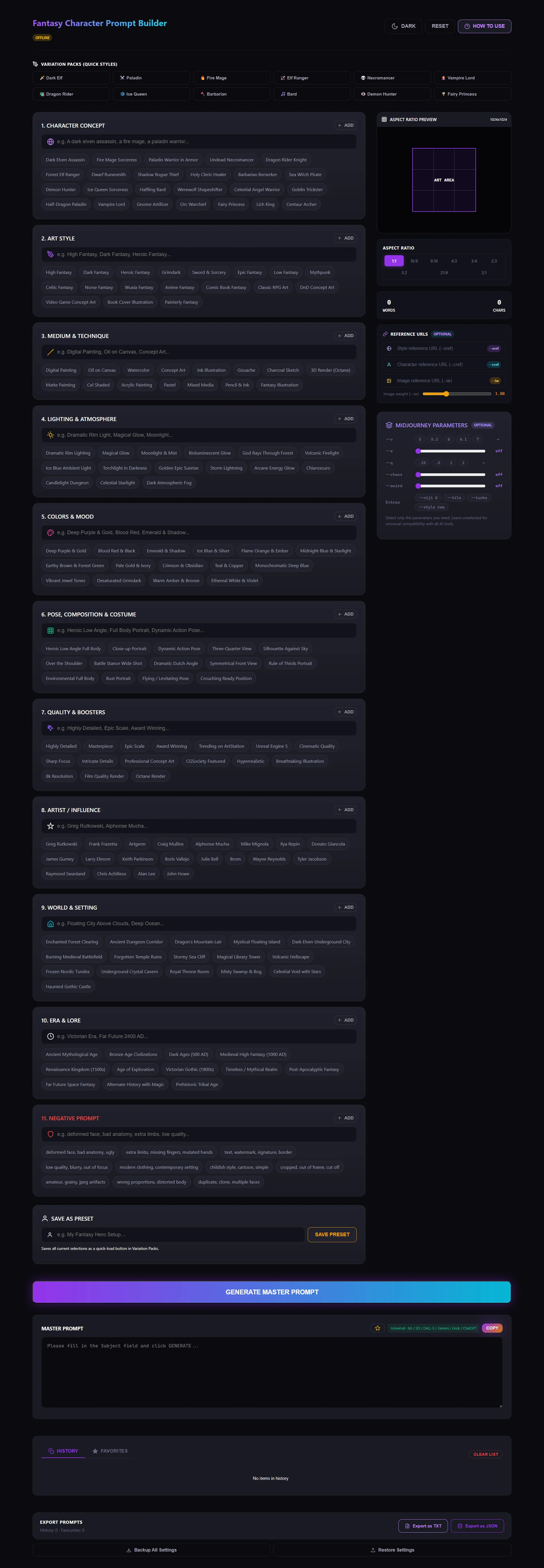
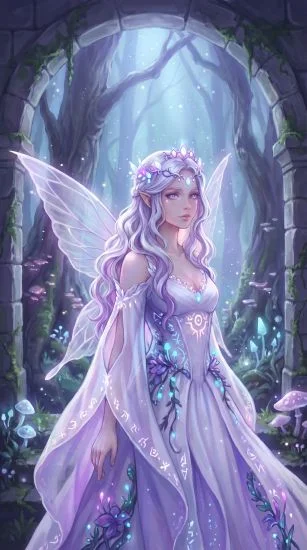
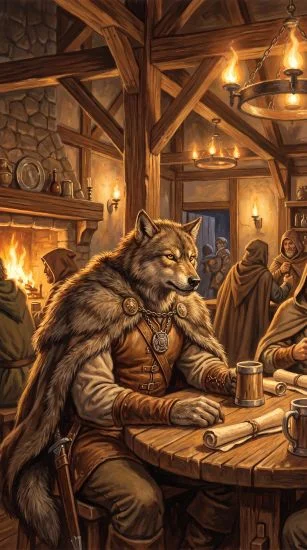
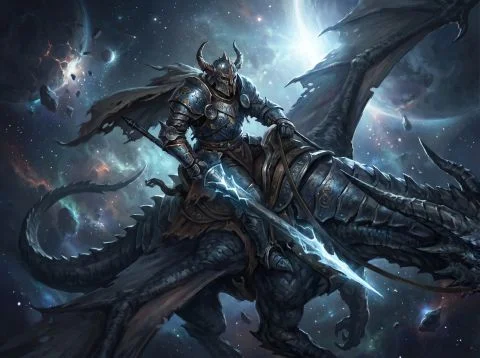
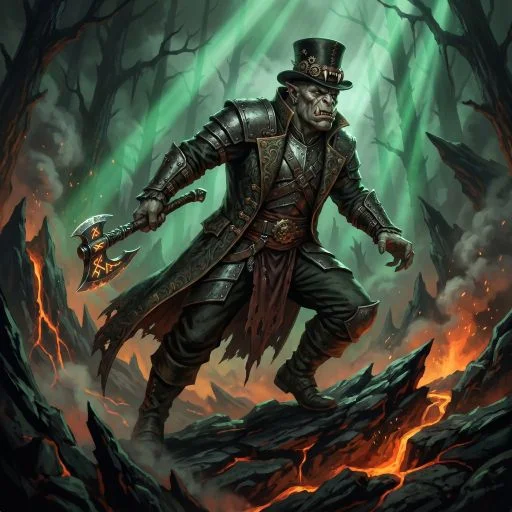
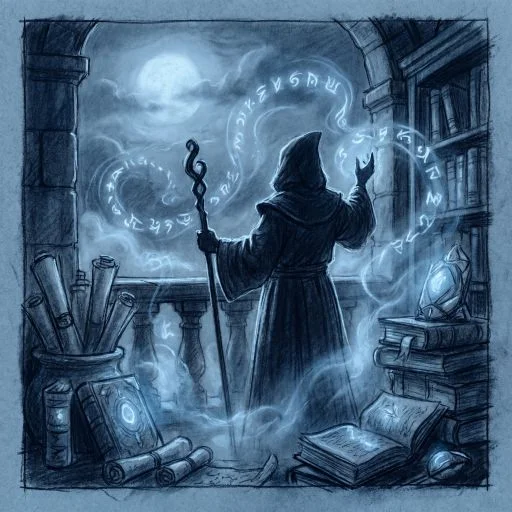
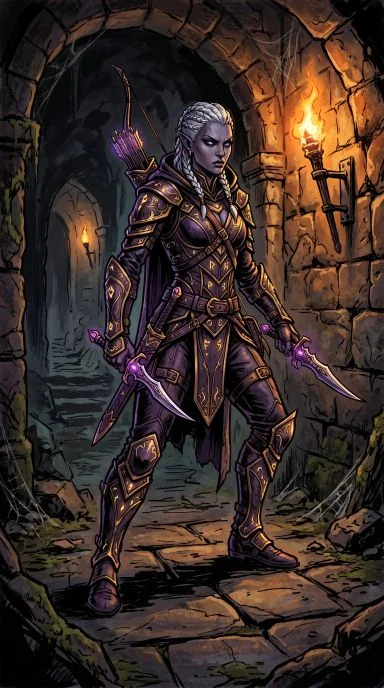
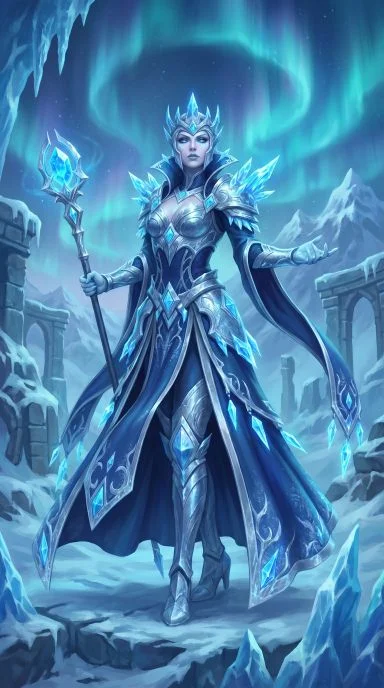
Creating believable fantasy characters with Artificial Intelligence is an art form. Without the right structure, AI models tend to produce generic faces, nonsensical armor, or anachronistic clothing. For Dungeon Masters, indie authors, and concept artists, having a reliable system to generate character portraits is invaluable. Our Fantasy Character Prompt Builder handles the complex syntax, but understanding the logic behind it will make you a master prompt engineer.
What is the best AI for fantasy character art?
Currently, Midjourney v6 is the undisputed king of fantasy concept art. Its understanding of textures, cinematic lighting, and dynamic composition is unparalleled. For anime-inspired fantasy, Midjourney's Niji 6 parameter is exceptional. DALL‑E 3 is great for exact adherence to physical descriptions but can feel a bit too "plastic" or stylized. Stable Diffusion is fantastic if you need exact pose control (via ControlNet), but it requires extensive setup. Our builder generates universal prompts that perform brilliantly across all these platforms, while offering specific parameter panels for Midjourney users.
How to prompt AI for perfect character concepts
A professional character design prompt is like a film director's shot list. It needs to be organized logically:
- Subject & Archetype: Clearly state who the character is (e.g., "A grizzled Dwarven Runesmith" or "A graceful High Elf Ranger").
- Costume & Texture: AI needs specifics. Don't just say "armor." Use chips like "Ornate Plate Armor," "Fur-Trimmed Cloak," or "Glowing Rune Engravings."
- Lighting & Atmosphere: Lighting dictates the mood. "Dramatic Rim Lighting" or "Volcanic Firelight" creates epic intensity, while "Moonlight & Mist" fits a rogue perfectly.
- Camera & Composition: Control the framing. Use "Heroic Low Angle Full Body" for action shots, or "Close-up Portrait" for dialogue tokens.
Mastering character consistency
The hardest part of AI character generation is keeping the same face across different images. If you use Midjourney, the solution is the --cref (Character Reference) parameter. You can paste an image URL of your generated character into the Builder's Reference Panel, set the image weight, and generate them again in a different setting or pose. Combined with the Builder's "Save as Preset" feature, you can lock in the exact prompt structure to ensure your character's art style remains identical.
Why negative prompting matters in fantasy
AI models have been trained on modern photographs, so they easily slip modern elements into fantasy scenes. Negative prompting is your shield against immersion-breaking errors. By adding --no modern clothing, contemporary setting, extra limbs, bad anatomy (all easily selectable in the Negative Prompt section), you force the AI to stick strictly to the historical and fantasy elements you requested.
Using variation packs for cohesive world-building
If you are illustrating an entire D&D campaign or novel, visual consistency between factions is vital. If your elves are painted in watercolor and your orcs look like 3D renders, the world feels disjointed. By utilizing the Variation Packs (like Dark Fantasy, Grimdark, or High Fantasy), you establish a baseline aesthetic. Simply load a pack, swap out the subject, and hit generate. You'll get a beautiful, unified cast of characters ready to populate your universe.
Ready to forge your champions? Grab the Fantasy Character Prompt Builder and bring your imagination to life.